Home Automation Essentials: Smart Upgrades for Safety and Convenience
Modern life never slows down. We race from work to family to home, juggling dozens of tasks. Wouldn’t it be a relief if your home could pitch in, handling the little things—keeping you safer, saving energy, and simplifying routines? That’s where home automation steps in.
At Warner Robins Electrical, 24/7 emergency electrician service isn’t just about fixing outages. We help families like yours take the next step into smart, safe living—with systems that make your home work for you, not the other way around.
What Is Home Automation? 🤖
Think of home automation as your home’s own “brain.” It connects devices like lights, locks, alarms, outlets, and thermostats, letting them talk to each other and to you. Through a phone app, voice control, or preset schedules, you can manage your home—even when you’re miles away.
Picture this: You’re at work and get a notification. A package just arrived. You check your video doorbell, talk to the delivery driver through the intercom, and unlock the smart lock—no need to rush home or worry about theft.
What’s possible with automation?
- Schedule lights to mimic sunrise or sunset.
- Get instant alerts if smoke or carbon monoxide detectors go off.
- Monitor who’s at your door from anywhere.
- Lower the thermostat automatically when you leave.
- Check if appliances are left on and switch them off remotely.
All these devices work together, linked through your home’s wiring and wireless networks. The right setup can blend old-school reliability (like wired Low Voltage Systems near you) with the latest tech.
Top Smart Upgrades for Safety (Locks, Cameras, Alarms) 🛡️
Safety isn’t just about locks and keys anymore. It’s about knowing what’s happening around your home—right now.
Key Upgrades That Boost Security and Peace of Mind
- Smart Locks: Ditch the spare key under the mat. Keypad entry, fingerprint scans, or phone controls let you lock and unlock doors securely—and track who comes and goes.
- Video Doorbells & Intercoms: See, hear, and speak with visitors, day or night. Some systems record footage automatically if motion is detected.
- Security Cameras: Indoor and outdoor cameras let you check in on kids, pets, or deliveries. Many save clips to the cloud for extra backup.
- Alarm Systems: Integrate smoke, carbon monoxide, and motion detectors. Get alerts on your phone and trigger emergency services when needed.
When these upgrades are installed by a skilled emergency electrician, they become your silent sentinels—always on guard.
Lighting and Climate Controls for Efficiency 💡
Smart automation isn’t just about gadgets—it’s about using energy wisely.
How It Lowers Bills and Cuts Waste
- Automated Lighting: Set schedules so lights turn off automatically when you leave, or dim in the evening. Motion sensors light up hallways only when needed—no more wasted energy.
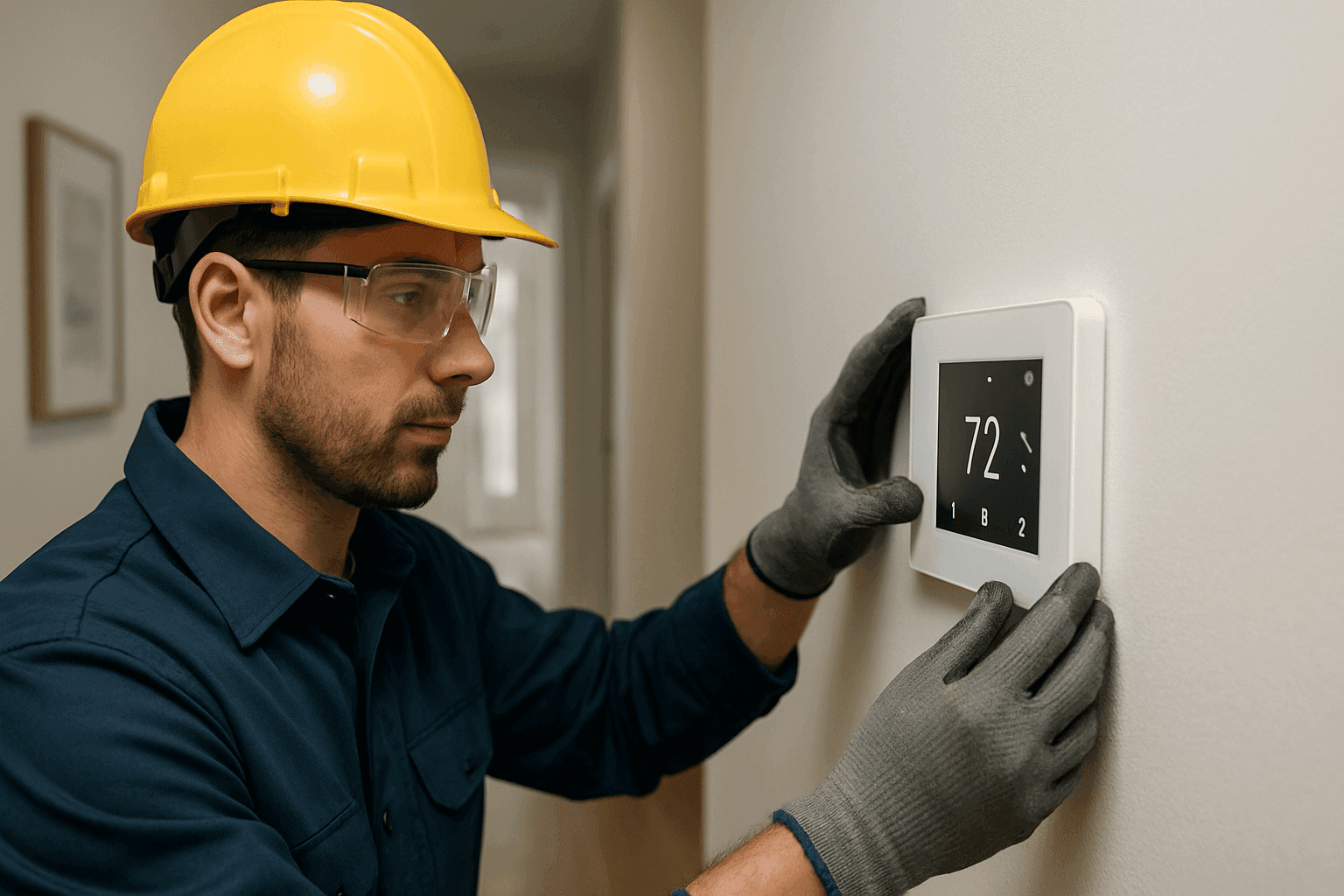
- Smart Thermostats: Adjust heating and cooling based on your routine. If everyone’s out, the system dials back to save money. Some models learn your patterns for even more savings.
- Pool & Spa Controls: Schedule pumps and heaters for off-peak hours, or turn them on remotely before you get home.
- Surge Protection: Modern power strips and whole-home surge protection guard against sudden spikes—protecting appliances and sensitive equipment.
According to the U.S. Department of Energy, smart thermostats alone can save homeowners up to 10% a year on heating and cooling costs.
Integrating with Existing Electrical Systems
Adding smart features isn’t always as simple as plugging in a new gadget. Your home’s wiring is like a city’s road map—everything needs to be connected the right way to avoid traffic jams… or worse, safety hazards.
Why Integration Matters
- Wired vs. Wireless: Some devices need new wiring, especially for high-voltage loads or built-in automation panels. Others run on Wi-Fi or Bluetooth.
- Compatibility: Not all devices “speak the same language.” Professional installation ensures your new systems work with existing panels, outlets, and Low Voltage Systems near you.
- Safety First: Overloading circuits or improper installation can lead to tripped breakers, fire hazards, or voided insurance. The National Electrical Code (NEC) sets strict guidelines on how and where devices can be installed.
An experienced emergency electrician knows how to weave new tech into old wiring—safely and seamlessly.
Choosing a Professional for Installation
Can you install a smart thermostat or doorbell yourself? Sometimes. But not all upgrades are DIY-friendly.
When to Call in a Pro
- Complex Wiring: High-voltage devices, whole-home automation panels, or anything tied into your breaker box is best left to a licensed electrician.
- Machine Wiring & Motor Controls: Smart upgrades for appliances or pool systems require expert handling.
- Safety Checks & Certificates: Professional installers ensure your system meets code—protecting your family and your investment.
Trying to shoehorn modern automation into an older home can be like fitting a square peg in a round hole. A qualified emergency electrician brings the know-how to do it right, the first time.
Practical Tips
- Always check that new devices are UL-listed and code-compliant.
- Ask for detailed safety inspections and get everything in writing.
- Make sure installers are insured and licensed for Low Voltage Systems near you.
Real-World Steps to Smarter, Safer Living
- Evaluate Needs: Start with the basics—what do you want to automate? Entryways? Lighting? Security?
- Check Your Wiring: Older homes may need upgrades before smart devices can be added.
- Choose the Right Devices: Look for compatibility with your existing system and future plans.
- Plan for Growth: Leave room for new tech down the road.
- Hire a Pro: Complex integration or safety concerns? Don’t risk it—call an emergency electrician.
Frequently Asked Questions
Can I install smart lighting myself?
Some systems are as easy as screwing in a bulb. But if you need to rewire switches or add new circuits, it’s safer to call a professional.
Will home automation work with my older house?
Usually, yes—but it may require updates to wiring or panels. Professional assessment is key.
Is automation safe during a power outage?
Backup generators and surge protection keep essential systems running, but not all devices work without power. Talk to your electrician about emergency setups.
How much does professional installation cost?
Prices vary based on complexity, number of devices, and any wiring upgrades needed. A pro can give you a clear estimate after an inspection.
Local and Seasonal Considerations
Georgia summers are hot and humid. Smart thermostats and climate controls can keep your home cool efficiently—without running up sky-high bills. Storm season? Surge protection and backup generators keep automation running smoothly, even when the power flickers.
Regulations and codes can vary, so always check the latest guidelines from the National Electrical Code (NEC) and local authorities.
Want a safer, smarter home—without the headaches? Call Warner Robins Electrical now — or reach us anytime at 877-837-7094 .