Backup Generators for Homeowners: Choosing, Installing, and Maintaining Power Security
When the power goes out, life screeches to a halt. No lights. No fridge. No heat. In the heat of summer or the chill of winter, every minute counts. If you rely on medical equipment, or if you simply want to protect your family’s comfort and safety, a backup generator isn’t just a luxury—it’s peace of mind.
At Warner Robins Electrical, we’ve seen firsthand what happens when storms roll in or the grid fails. Homeowners call us, stressed and searching for answers. Good news: you can take control. Here’s how to choose, install, and keep your generator ready, so the next blackout is just a blip.
Why Home Backup Generators Matter ⚡
Imagine a thunderstorm raging outside. The lights flicker, then darkness. Your freezer warms up, medical devices beep, and your home’s security system goes offline. For many, this is more than an inconvenience. It’s a real risk.
Backup generators bridge that gap. Here’s when they’re essential:
- Severe storms and hurricanes: Power lines down? Your home stays bright.
- Extended grid outages: Long repairs don’t mean spoiled food or lost work.
- Medical needs: Equipment like oxygen concentrators keep running.
- Remote work and learning: Keep Wi-Fi, computers, and phones powered.
- Safety and comfort: Sump pumps, HVAC, and lighting operate as usual.
As the National Fire Protection Association (NFPA) and FEMA point out, preparedness is key for every household. If you live in an area prone to outages—or just want to be ready for the unexpected—a backup generator is your safety net.
Types of Backup Generators (Portable vs. Standby) 🔄
All generators promise power, but not all work the same way. The right fit depends on your needs and lifestyle.
Portable Generators
Think of these as the “grab-and-go” solution:
- Pros: Affordable, movable, runs on gasoline or propane, simple to store.
- Cons: Limited power, manual start, must be refueled, can’t run large appliances for long.
- Best for: Short outages, powering essentials like a fridge, a few lights, or chargers.
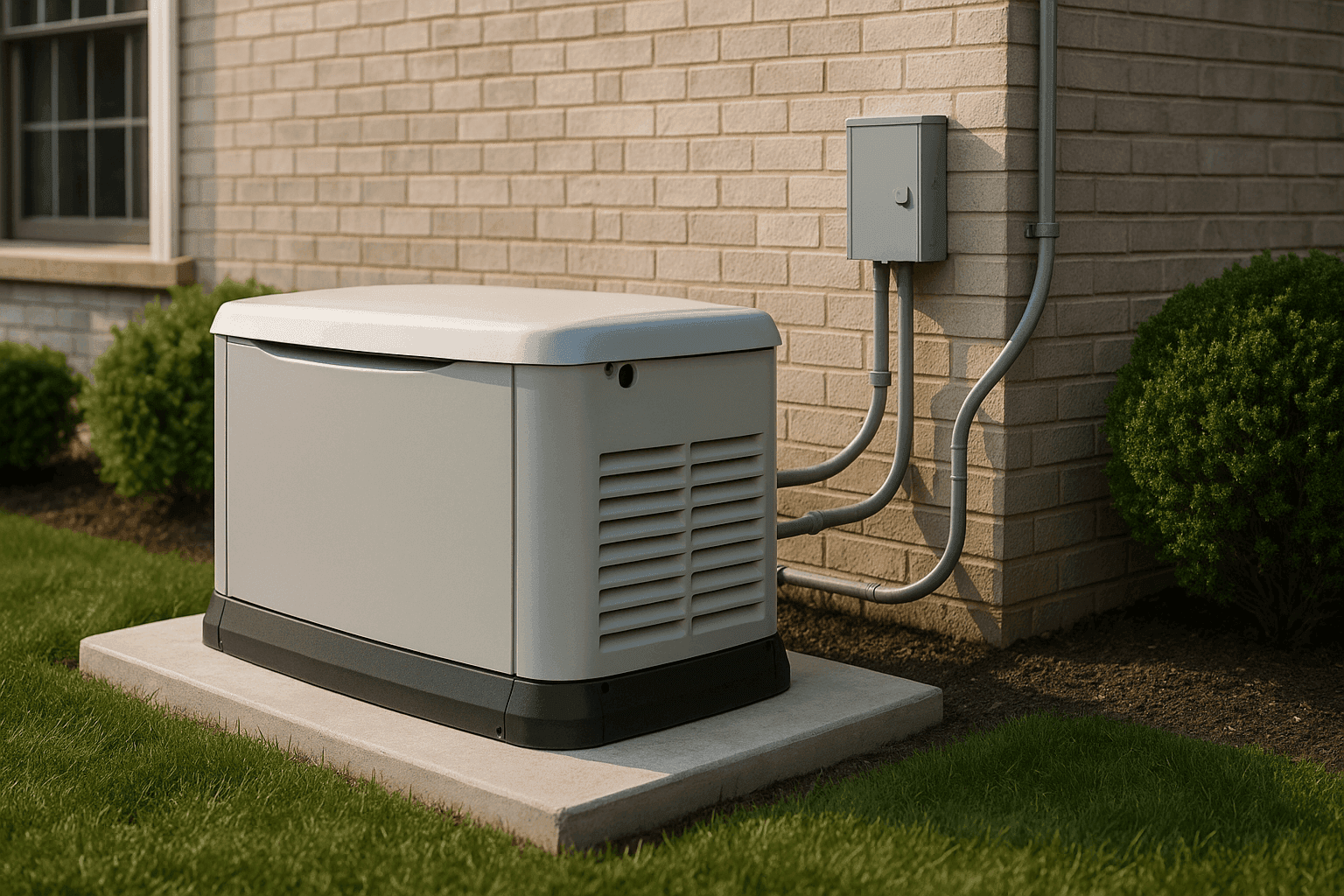
Standby Generators
The “set it and forget it” option:
- Pros: Permanent fixture, powers most or all of your home, automatic start when power fails, connects directly to natural gas or propane.
- Cons: Higher upfront cost, must be installed by an emergency electrician, requires routine professional maintenance.
- Best for: Homes with medical equipment, frequent outages, or anyone wanting seamless comfort.
Some homeowners also ask about inverter generators—quiet, efficient, but often best for RVs or camping, not whole-house backup.
Choosing the Right Size and Features
Picking a generator is like sizing shoes: too small, and you’re left unprotected; too big, and you waste money. Here’s what to consider:
1. Calculate Power Needs
Make a list—what must stay on during an outage? Essentials often include:
- Refrigerator and freezer
- Medical devices
- Sump pump
- Heating and cooling
- Lights and outlets
- Internet router
Add up the wattage. Most standby generators start at 7,000-10,000 watts for basic needs; larger homes may need 20,000+ watts.
2. Fuel Source
- Natural Gas: Reliable, no need to refuel, but requires a gas line.
- Propane: Clean burning, stores well, but tanks need refilling.
- Gasoline: Easy to get, but not for standby models and requires safe storage.
3. Transfer Switches
Automatic transfer switches sense outages and swap your home to generator power instantly. Manual switches work but require you to act fast. For safety and code compliance (see National Electrical Code [NEC] Section 702), automatic switches are recommended for most homes.
4. Special Features
- Remote monitoring: Some models alert your phone when running.
- Noise level: Quieter is better for neighborhoods.
- Weather resistance: Especially if installed outdoors.
Professional Installation Process
Installing a generator isn’t a weekend DIY. It’s more like open-heart surgery for your home’s electrical system.
Here’s what an emergency electrician from Warner Robins Electrical will do:
- Site Assessment: We check your home’s needs, panel capacity, and the best location (away from windows and doors, per manufacturer and code).
- Permitting and Codes: We handle local permits and ensure everything meets NEC, NFPA, and local utility requirements.
- Pad and Mounting: The generator sits on a concrete or composite pad to prevent shifting or flooding.
- Fuel Connection: Licensed professionals run a safe, code-compliant gas line or propane hookup.
- Transfer Switch Wiring: We install and wire the automatic transfer switch, connecting it to your main panel.
- Testing and Instruction: Once installed, we test the system and show you how and when it will run.
Why go pro? Safe wiring prevents hazards. A professional setup protects your investment and your family.
Routine Maintenance for Reliability 🛠️
A generator is like a car—you can’t just park it and forget it. Regular care means it’s always ready when you need it most.
The Maintenance Checklist
- Run It Monthly: Let it power up for 10–15 minutes to keep parts lubricated.
- Change Oil: Follow your manufacturer’s schedule (often every 50–100 hours).
- Replace Filters and Plugs: Spark plugs and air filters need swapping out yearly.
- Check Fuel Supply: For propane or gasoline units, ensure tanks are full and fuel is fresh.
- Inspect Battery: Standby generators rely on batteries for automatic starting—test and replace as needed.
- Clean Vents and Housing: Remove leaves, dirt, and snow around outdoor units.
- Test Transfer Switch: Make sure it activates and reverts properly.
The Electrical Safety Foundation International (ESFI) recommends annual professional inspections—even if you’re handy, an emergency electrician can catch hidden issues before they become big problems.
Frequently Asked Questions
How long will a standby generator run during an outage?
It depends on your fuel source and tank size. Natural gas units can run indefinitely (as long as supply isn’t interrupted). Propane or gasoline models run until the tank is empty—often 24–72 hours per fill.
Do I need a permit to install a generator?
Yes. Most municipalities require a permit and inspection for home generator installations. This ensures safety and code compliance.
Can I install a standby generator myself?
It’s strongly discouraged. Electrical and gas connections pose serious risks. Professional installation is required by code in most areas.
How noisy is a standby generator?
Modern standby units are quieter than a window AC. Still, decibel levels vary by model—ask your electrician for options that meet local noise ordinances.
Local and Seasonal Considerations
Weather in the Warner Robins area is unpredictable. From summer storms to winter cold snaps, outages can strike any time. Generators must be installed above flood level and shielded from heavy rain. If your home has a pool or spa, or you’re considering EV chargers, tell your electrician—these extra loads matter when sizing your generator.
Final Thoughts
A backup generator is more than a machine—it’s your family’s safety net. From low voltage systems to high-voltage wiring, Warner Robins Electrical walks you through every step: sizing, installation, maintenance, and ongoing support. Don’t wait for the next outage to take action.
Call Warner Robins Electrical now — or reach us anytime at 877-837-7094 .